Winning Chess Openings – 9 Rules That Would Let You Win The Game
Winning Chess Openings define the best possible moves that will increase your chance of winning from the very start. Chess is a two-player strategy game played by professionals and amateurs throughout the world on a 64-square board. Many players have mastered these chess hints and techniques to overcome their opponents' strategies. In this guide, we'll explore 9 proven opening strategies that can help you dominate your games.
🏰 1. The Ruy Lopez Opening
The Ruy Lopez is one of the oldest and most respected chess openings. Named after the 16th-century Spanish priest Ruy López de Segura, this opening provides White with excellent strategic prospects and has been favored by World Champions from Lasker to Carlsen.
The opening begins: 1.e4 e5 2.Nf3 Nc6 3.Bb5
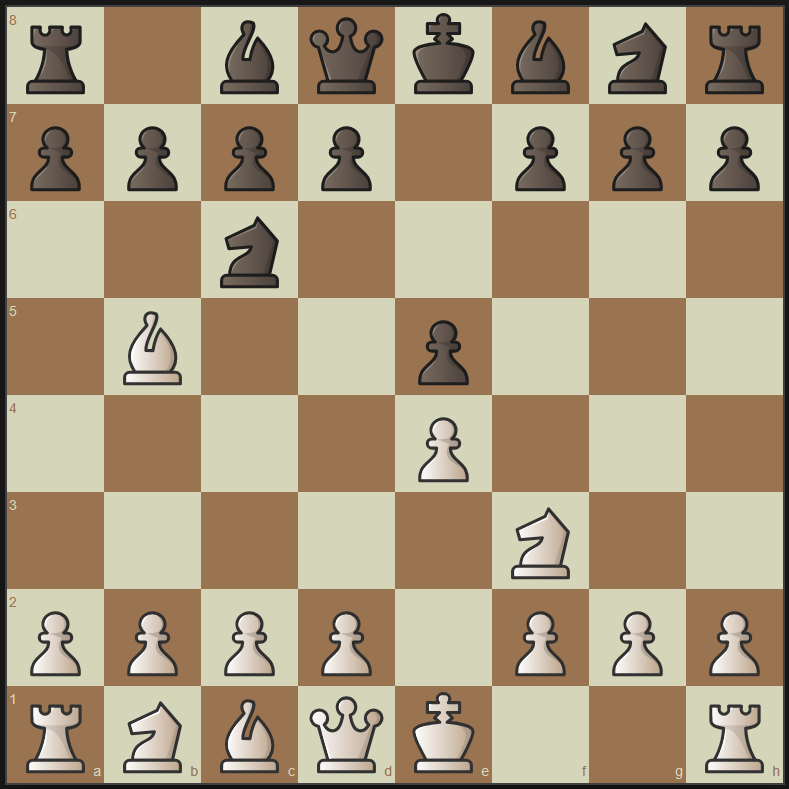
By attacking the knight that defends the e5 pawn, White creates long-term pressure and builds toward a strong center. The Ruy Lopez leads to rich middlegame positions where understanding trumps memorization.
⚔️ 2. The Sicilian Defense
The Sicilian Defense is the most popular and successful response to 1.e4 at the grandmaster level. It creates an asymmetrical position where Black fights for the center with c5 rather than e5, leading to complex tactical battles.
The opening begins: 1.e4 c5
First analyzed in the 1600s, the Sicilian has numerous variations including the Najdorf, Dragon, and Scheveningen. It's the weapon of choice for aggressive players seeking winning chances with Black.
👑 3. The Queen's Gambit
The Queen's Gambit is one of the oldest known chess openings, documented in the Göttingen manuscript of 1490. It's not a true gambit since White can always regain the pawn, but it offers rapid development and central control.
The opening begins: 1.d4 d5 2.c4
White offers the c4 pawn to deflect Black's d5 pawn from the center. Whether Black accepts (Queen's Gambit Accepted) or declines, White gains space and piece activity. This opening became famous worldwide after the Netflix series "The Queen's Gambit."
🛡️ 4. The Alekhine Defense
The Alekhine Defense was introduced to master-level chess by the fourth World Champion, Alexander Alekhine, in 1921. This hypermodern opening invites White to advance pawns which Black later attacks.
The opening begins: 1.e4 Nf6
Black's knight immediately attacks the e4 pawn, provoking it forward. After 2.e5 Nd5 3.d4 d6, Black targets White's overextended center. This defense requires precise knowledge but offers excellent counterattacking chances.
🎯 5. The Modern Defense
The Modern Defense is a flexible hypermodern system where Black delays central pawn moves, instead developing the kingside fianchetto first. It can transpose into the King's Indian Defense or Pirc Defense.
The opening begins: 1.e4 g6 or 1.d4 g6
This opening was popularized by British grandmasters in the 1960s. Black allows White to build a pawn center, planning to undermine it later. The flexibility makes it difficult for White to prepare against.
🐘 6. King's Indian Defense
The King's Indian Defense is one of the most dynamic responses to 1.d4. Black allows White to establish a broad pawn center, then launches a fierce kingside attack. It's been the favorite weapon of legends like Garry Kasparov and Bobby Fischer.
The opening begins: 1.d4 Nf6 2.c4 g6 3.Nc3 Bg7 4.e4 d6 5.Nf3 O-O
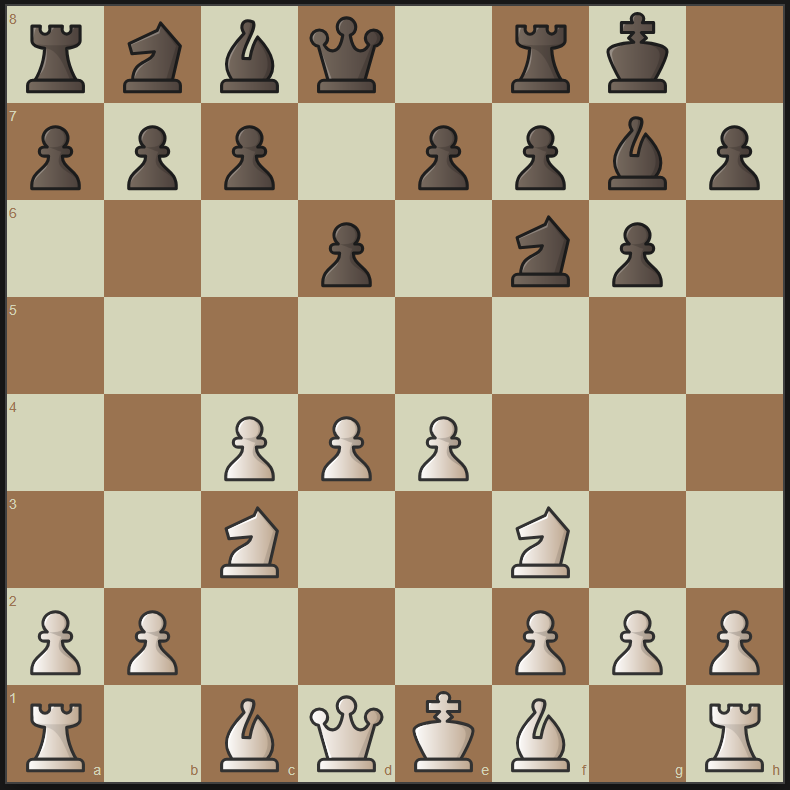
Black's bishop on g7 becomes a monster, eyeing White's center. The typical plan involves ...e5 followed by ...f5, launching a kingside pawn storm while White expands on the queenside.
⚡ 7. King's Indian Attack
The King's Indian Attack (KIA) is a universal system for White that can be played against virtually any Black setup. It's the reversed King's Indian Defense with an extra tempo, offering a solid, strategic approach.
White's setup: Nf3, g3, Bg2, O-O, d3, Nbd2, e4
The KIA has been used by Bobby Fischer and other world champions when they wanted a solid position without needing to memorize extensive theory. It's particularly effective against the French and Sicilian defenses.
🌊 8. The Dutch Defense
The Dutch Defense is an aggressive response to 1.d4 where Black immediately stakes a claim on the e4 square. It leads to unbalanced positions where both sides have winning chances.
The opening begins: 1.d4 f5
The Dutch has three main systems: the Classical (with ...e6 and ...Be7), the Stonewall (with pawns on d5, e6, f5), and the Leningrad (with ...g6 and ...Bg7). It's an excellent surprise weapon against d4 players.
🦁 9. The Stonewall Attack
The Stonewall Attack is considered by many grandmasters as one of the most formidable opening systems in chess. It creates a rock-solid pawn structure that's extremely difficult to crack, earning it the nickname "King of Chess Openings."
White's setup: Pawns on c3, d4, e3, f4 with pieces developed behind them.
The Stonewall creates an impenetrable barrier while allowing White to launch a kingside attack. The structure resembles a stone fortress, hence the name. It's particularly effective for players who prefer systematic, strategic play over sharp tactical complications.
❓ Frequently Asked Questions
What is the best chess opening for beginners?
For beginners, the Italian Game (1.e4 e5 2.Nf3 Nc6 3.Bc4) and London System are excellent choices. They're straightforward, teach good opening principles, and don't require extensive memorization.
What is the most powerful chess opening?
There's no single "most powerful" opening, but the Ruy Lopez, Queen's Gambit, and Sicilian Defense are among the most successful at all levels. The best opening is one that suits your playing style.
How can I improve my chess opening play?
Focus on principles rather than memorization: control the center, develop pieces, castle early, connect rooks. Use chess hints and analysis tools to understand why moves are played, not just what to play.
🎮 Practice These Winning Chess Openings
Now that you've learned these 9 powerful opening strategies, it's time to put your chess hints knowledge into practice! Use our free Chess Position Analyzer to explore variations and understand the key ideas. Or challenge yourself against Stockfish at various difficulty levels.